If you're creative and would like the opportunity to work with your hands and develop a skilled craft, then a career in jewellery could be for you.
Starting your career in jewellery
There is no set route to a career in jewellery. Before signing up for formal training, you may want to try a short evening or weekend course to get a taste of whether jewellery could be for you.
Training in jewellery
Further education colleges offer a range of jewellery diplomas and BTEC courses.
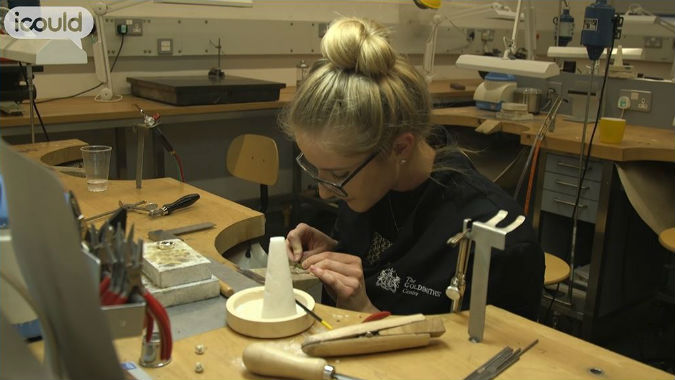
Jewellery apprenticeships provide you with real hands-on experience and give you the opportunity to work alongside and learn from experienced jewellers.
The Goldsmiths’ Company runs a respected apprenticeship scheme, where apprentices are employed by top goldsmiths. The Goldsmiths’ Centre also runs a foundation programme which gives students an introduction to different aspects of jewellery-making.
Another option is to study at an art college or university. Degree courses include subjects such as jewellery, metalwork and silversmithing.
Did you know?
Over 55,000 people are employed in the UK jewellery industry.
What makes a good jeweller?
Someone who is:
- creative and passionate about their work
- good at working with their hands
- able to be precise, with excellent attention to detail
- a good communicator and able to work well with other craftspeople
- reliable and trusted by their clients
There are over 16,000 jewellery industry-related businesses in the UK.
Where to work in jewellery
The main centres for jewellery workshops and manufacture are London, Birmingham, Sheffield and Edinburgh, but you can find jewellers across the UK.
As a skilled jeweller, you could work for a big international jewellery brand, a small independent jeweller or anywhere in between. Lots of jewellers go on to set up their own businesses.
The UK jewellery industry generates an annual profit of over £700 million.
The future of the UK jewellery industry
Developments such as 3D printing and Computer Aided Design (CAD) have created new possibilities for jewellery-making but traditional skills are still very much in demand. “Today new digital tools are redefining the maker’s processes and toolbox,” explains Director of the Goldsmiths’ Centre, Peter Taylor, “These allow users to create precise models of their ideas to share with clients and support the manufacturing process. Combined with traditional techniques, such as fine, diamond mounting and stone setting, goldsmiths are able to create spectacular pieces.”
“New digital tools are redefining the maker’s processes and toolbox,”
Peter Taylor, Director of the Goldsmiths’ Centre.
Roles in jewellery
The look, feel and shape of a piece of jewellery is decided by a jewellery designer based on a client’s instructions. Goldsmiths/silversmiths make jewellery and other items from gold or silver. There are three main stages in the production of fine jewellery and each has its own role:
- jewellery mounters create the body of a piece of jewellery
- stone setters secure gemstones or diamonds into the piece of jewellery or silverware
- polishers or finishers ensure that the desired finish for each piece is achieved
In addition, there are a variety of other jobs in jewellery:
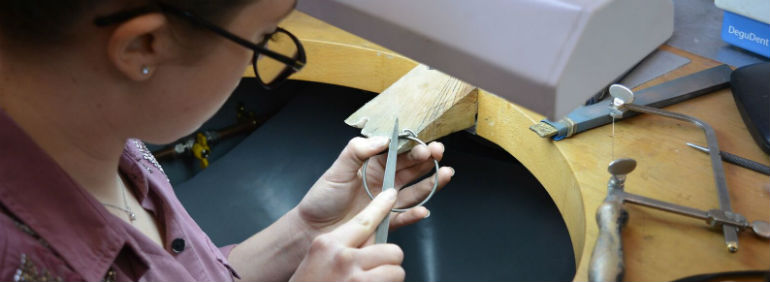
- bench jewellers undertake repairs and alterations, and also make new items
- model makers produce models which are used to make multiple copies of an item using the casting process
- casters make multiple items for production purposes
- engravers engrave lines, words and other markings onto metal
- enamellers apply powdered glass and heat to metal in order to create a decorative, coloured finish
- CAD/CAM designers use computer software to design and create jewellery
- watchmakers/horologists design, make and repair watches
Apprentice diamond mounter
"Do stuff that gets you used to working with your hands." Ben is now an apprentice with jeweller Dominic Walmsley.
Watch now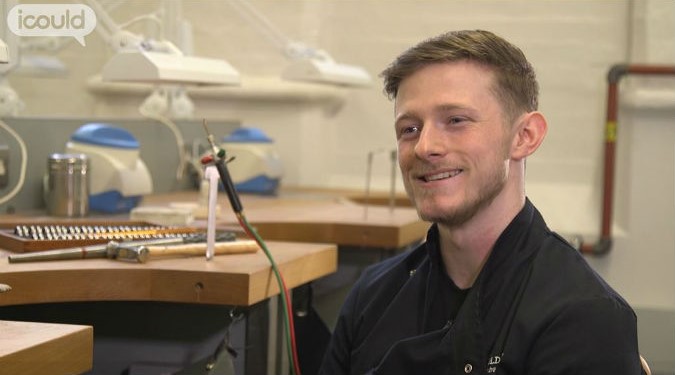
If design or making is not your thing, you can also work for the jewellery industry in retail, buying or marketing roles.
What is a Master goldsmith?
A Master goldsmith is trained to work with precious metals using a variety of techniques. Most goldsmiths learn their craft through an apprenticeship, which can last up to five years. Goldsmiths do not stop learning once they have finished their apprenticeship and many enter competitions or continue to attend training to become exceptional in their skill.
Watch more jewellery videos
Apprentice Diamond Mounter (Justin Richardson Jewellery)
Managing Director and Engraver
Fine Jewellery Design Apprentice
Find out more
Jewellery and Allied Industries Training Council – general information about the industry and training courses.
Benchpeg – job vacancies in the jewellery industry.