Post Production Editor
BBC Belfast
Cathy W
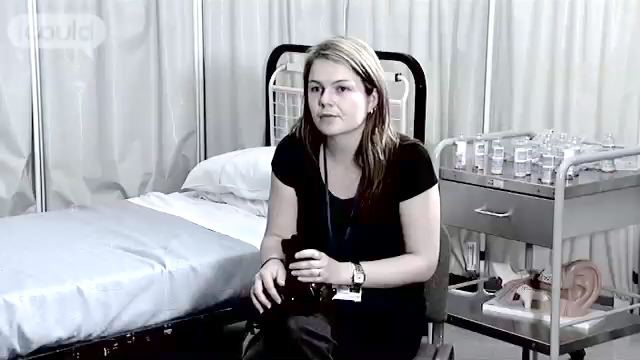
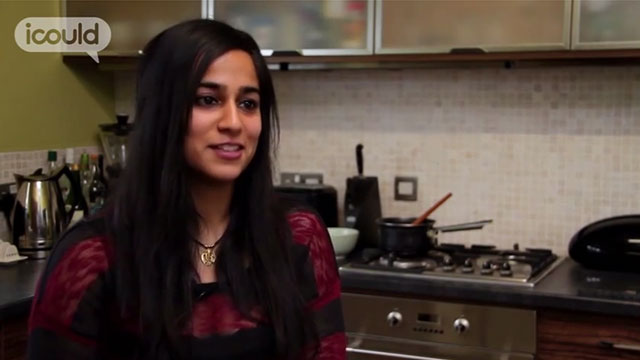
00:02 I’m Cathy W. I work for BBC Northern Ireland and I’m a post production editor.
00:06 Post production editor uh basically works across a couple of different areas in BBC Northern Ireland in news and across factual television programmes and sport and you basically cut together rushes of, of programmes to make the final product.
00:21 It can be a very hard job, yeah and it is a hard job, it’s sometimes very long hours, demanding. It can be quite testing of your patience but it’s very rewarding as well, it’s, it’s great to kind of get into something at the very beginning and be part of that process and have something at the end of it that you’re very proud of.
00:39 I started in the BBC about seven years ago as a technical trainee and I came in with kind of no skills in broadcasting at all and I started off with graphic design and audio and editing and I’ve worked my way up through that and specialising in editing eventually. And as post production editor about, made that about three years ago now.
01:00 I loved school, I really, really enjoyed it. I just, it was a good school. I had good friends, I loved all the subjects I did, just it was, I really enjoyed it, it was a great time for me.
01:10 Well I was very into maths when I was in, at school. My dad was an engineer and my mum she worked in sort of garages and odd jobs and opticians and things like that but my dad was very engineering-minded and I sort of always thought I’d go towards maths. But my sister was very artistic and sort of followed in her footsteps a little bit and sort of went down the art path which developed into, into this.
01:33 I left university at the end of the second year, really not liking it at all. The course just wasn’t what I thought it was going to be. Coming from quite a good school experience into that was a bit of a shock as well so it was just kind of, little bit, getting very nervous now, this is terrible. I think coming from a school that was, was all girls and was quite competitive and you sort of, I was quite good at the subjects that I was involved in at school and then suddenly to go to university where you’re sort of, you’re in amongst everybody who was all, they were all quite good at, you know, what they did at their schools and you sort of feel yourself a bit going out on the periphery but just, I think a bit of confidence in myself then.
02:14 At the time when I left then I became a coffee shop manager and my mum knew I wasn’t happy doing that. So she kept an eye out in the papers and saw a couple of trainee schemes and said, why don’t you go for that so it was a bit of a drop in pay by about ten thousand pounds and I thought hmm, do I want to do that or do I not? But that worked out very well, I have to say I’m glad I did.
02:36 I was worried about having dropped out and kind of taking that path and then you’d be up against people who maybe would have gone to university and done specific courses in that kind of thing and they’d have a, you know, a higher level of understanding of the technologies and everything else behind it, so I actually thought I’d be at a bit of a disadvantage. But it actually turns out that kind of was a bit of an advantage cos I’d had a bit of experience in the outside world.
03:01 Depending on what I’m doing, what I’m working on, I feel different levels so confidence. I mean I wouldn’t say I come into work every day going, yes I’m really good, really, really good at this and you know, today’s going to be great, just kind of take one day as it come and just take every challenge that comes because specially working in editing, every day you’re working with something different and it’s a different challenge in terms of how you deal with that, how you deal with the people that you’re working with, so that no two days are same.
03:28 There’s been lots of times when I’ve been in the BBC I’ve thought, this is what I want to do and then you’d try something else and actually that’s what I want to do and then you sort of realise it’s all interchangeable and you can do lots of different parts to different jobs um within the same organisation and I don’t know if I really, if I ever thought I want to be a post production editor or if it’s sort of it’s just come that way around. I don’t know if I’ll be one in five years or if I’ll have moved into a different area, a different subject or into production or it’s kind of not set in stone.
03:59 END
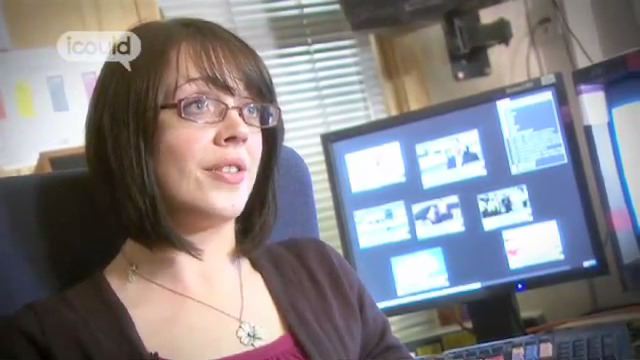
Cathy W works for BBC Northern Ireland as a post production editor. She really enjoyed school, but found university completely different. She left university after her second year and went to work in a coffee shop, and while she was there her mum found out about the training scheme at the BBC. Cathy enjoys the variety of the job – “every day you’re working with something different and it’s a different challenge in terms of how you deal with that, how you deal with the people that you’re working with, so that no two days are same.”
More information about Photographers, audio-visual and broadcasting equipment operators
The UK average salary is £29,813
There are 37.5 hours in the average working week
The UK workforce is 47% female and 53% male
Future employment
- Selects subject and conceives composition of picture or discusses composition with colleagues;
- Arranges subject, lighting, camera equipment and any microphones;
- Inserts lenses and adjusts aperture and speed settings as necessary;
- Operates scanning equipment to transfer image to computer and manipulates image to achieve the desired effect;
- Photographs subject or follows action by moving camera;
- Takes, records and manipulates digital images and digital video footage;
- Controls transmission, broadcasting and satellite systems for television and radio programmes, identifies and solves related technical problems;
- Checks operation and positioning of projectors, vision and sound recording equipment, and mixing and dubbing equipment;
- Operates equipment to record, edit and play back films and television programmes;
- Manages health and safety issues;
- Operates sound mixing and dubbing equipment to obtain desired mix, level and balance of sound.